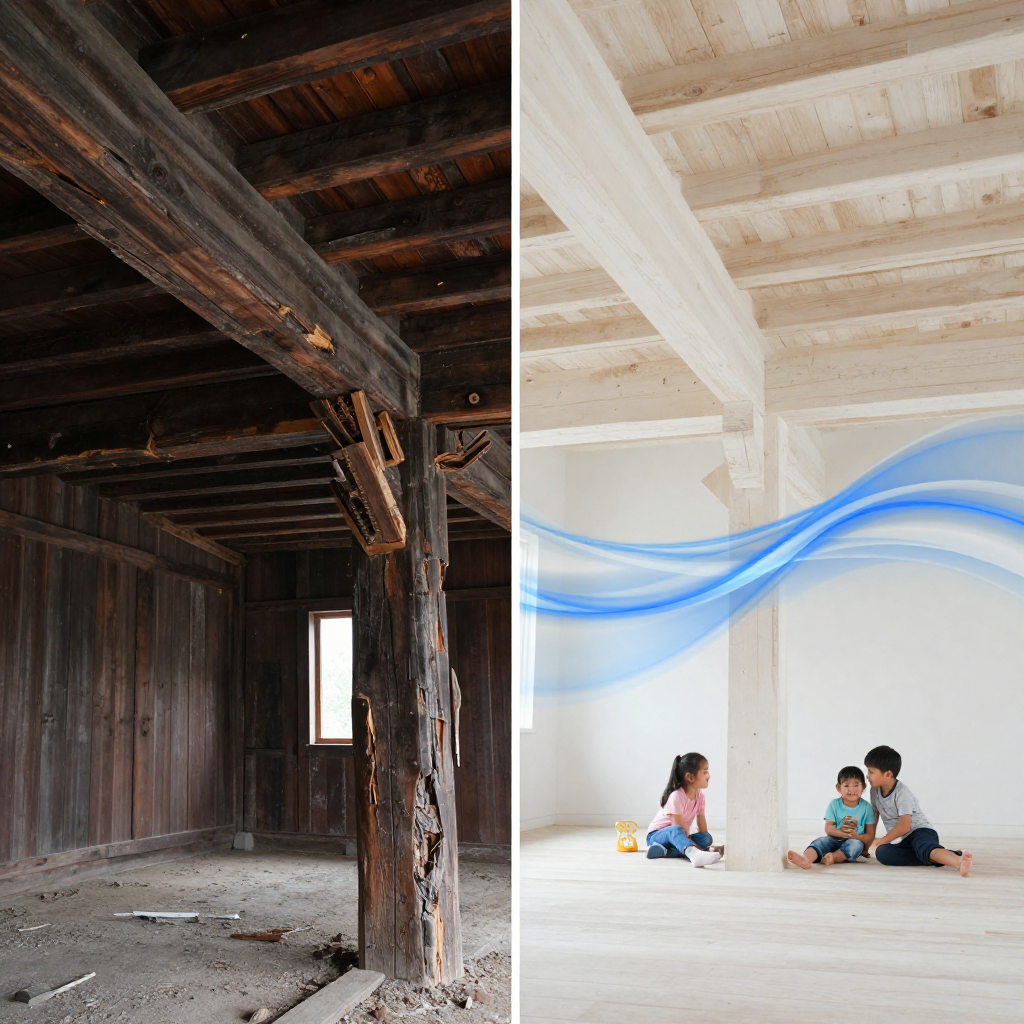
One of the most common questions homeowners ask before choosing microwave woodworm treatment is, “What actually happens to the wood?” It’s a reasonable concern, especially when dealing with valuable structural beams, antique furniture, or historic timber that cannot easily be replaced.
Unlike traditional treatments that rely on chemical insecticides or fumigation, microwave technology works by applying carefully controlled non-ionizing electromagnetic energy. Rather than coating the wood with chemicals, Shashel targets the active wood-boring insects living inside the timber. Understanding this process helps explain why microwave technology has become an increasingly popular option for modern wood preservation.
Understanding the Basics
Wood is a natural material made primarily of cellulose, lignin, and varying amounts of moisture.
The amount of moisture present depends on factors such as:
- The species of wood
- Its age
- Environmental conditions
- Indoor humidity
- Whether the timber has been properly seasoned
Wood-boring insects, on the other hand, contain significantly more moisture than the surrounding dry timber.
This difference is central to how microwave treatment works.
How Microwave Energy Interacts with Wood
Shashel systems generate carefully controlled non-ionizing microwave energy.
As this energy passes through the timber, it interacts with water molecules.
Because insects contain more moisture than seasoned wood, they absorb microwave energy more efficiently.
As a result:
- The insects heat more rapidly.
- Their internal temperature rises.
- Active insects inside the treated area can be eliminated.
The treatment relies on controlled heating rather than chemical toxicity.
What Happens Inside the Timber?
Although the wood may appear unchanged from the outside, activity is taking place beneath the surface.
During treatment:
- Microwave energy penetrates the timber.
- Moisture-rich insects absorb energy efficiently.
- Heat develops primarily within the insects.
- Their lifecycle is interrupted.
The process can affect:
- Eggs
- Larvae
- Pupae
- Adult beetles present within the treated area
Because woodworms spend most of their lives hidden inside timber, this internal approach is especially valuable.
Does the Wood Become Radioactive?
No.
A common misconception is that microwave treatment somehow leaves wood radioactive.
This is not the case.
Microwave woodworm treatment uses non-ionizing radiation, which is fundamentally different from ionizing radiation such as X-rays or gamma rays.
During treatment:
- No radioactive materials are used.
- The timber does not become radioactive.
- The microwave energy is present only while the equipment is operating.
Once the treatment is complete, the energy is no longer being applied.
Does the Appearance of the Wood Change?
When microwave treatment is carried out correctly using professional equipment and procedures, the goal is to eliminate active insects while preserving the appearance and integrity of the timber.
In most cases, homeowners can expect the wood to retain its:
- Natural grain
- Surface finish
- Color
- Shape
- Decorative features
The existing exit holes created by previous generations of wood-boring beetles will still be visible unless they are repaired as part of a separate restoration process.
Does Microwave Treatment Repair Existing Damage?
No.
Microwave treatment eliminates active infestations, but it does not reverse damage that has already occurred.
If woodworms have created tunnels or weakened parts of the timber, those effects remain after treatment.
Depending on the condition of the wood, additional restoration work may include:
- Filling old exit holes
- Repairing decorative surfaces
- Reinforcing weakened sections
- Replacing timber that has suffered severe structural damage
Treating the infestation prevents further activity but is separate from repairing past damage.
Why Controlled Treatment Is Important
Professional microwave systems are designed to deliver controlled energy to the treatment area.
Before work begins, technicians evaluate factors such as:
- Timber thickness
- Moisture content
- Accessibility
- Structural layout
- Location of the infestation
- Treatment objectives
This assessment helps determine the most appropriate treatment strategy for each project.
Supporting the Preservation of Original Timber
One of the biggest advantages of microwave technology is that it focuses on preserving existing wood whenever possible.
This is particularly important in:
- Historic buildings
- Museums
- Churches
- Timber-framed homes
- Antique furniture
- Heritage restoration projects
Rather than automatically replacing valuable timber, professionals can treat active infestations while maintaining original materials whenever they remain suitable.
A Chemical-Free Process
Unlike many conventional treatments, Shashel microwave technology does not rely on:
- Chemical insecticides
- Toxic fumigants
- Surface pesticide applications
- Chemical wood preservatives as part of the microwave process
As a result, the treatment leaves no pesticide residues on the treated timber.
This makes microwave technology an attractive option for homeowners seeking a chemical-free approach to active woodworm control.
What Happens After Treatment?
Once treatment has been completed, the timber remains part of the building as before.
Homeowners are encouraged to continue good maintenance practices, including:
- Repairing leaks promptly
- Improving ventilation
- Managing indoor humidity
- Inspecting timber regularly
- Monitoring for signs of new woodworm activity
These steps help reduce the likelihood of future infestations.
Why Homeowners Choose Microwave Technology
Many property owners choose microwave treatment because it combines effective pest control with timber preservation.
Key benefits include:
- Chemical-free treatment
- Targeted elimination of active wood-boring insects
- No pesticide residues
- Preservation of original timber
- Suitable for both modern and historic buildings
These advantages have made Shashel an increasingly popular choice for homeowners, restoration specialists, and pest control professionals.
Conclusion
During microwave pest treatment, the wood itself is not coated with chemicals or altered through radioactive processes. Instead, Shashel uses carefully controlled non-ionizing microwave energy to target the moisture-rich wood-boring insects hidden inside the timber. The treatment is designed to eliminate active infestations while preserving the wood’s appearance and original structure whenever possible.